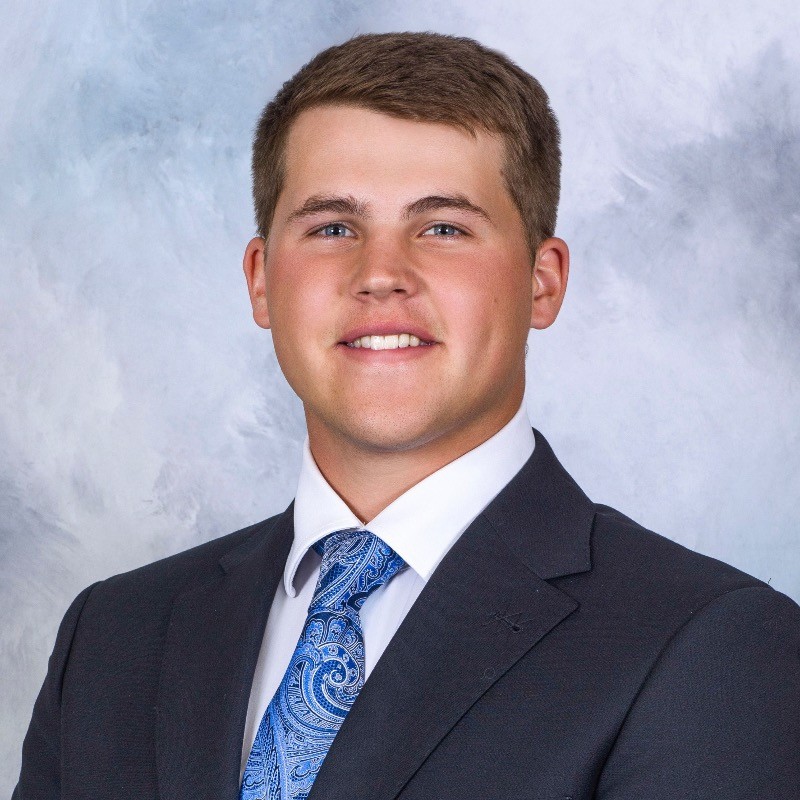
Ben Barousse will tell you that the fraternity network has surprisingly deep roots in Washington, D.C. He knows this not because someone told him, but because those roots lifted him into one of the most coveted internship placements in the country — the Office of the Speaker of the House.
The Covington, Louisiana native and Finance major at LSU’s E.J. Ourso College of Business did not stumble into that opportunity. He built toward it, one relationship at a time, the same way he built toward the Student Body Presidency at one of the largest public universities in the South.
“A connection led to a conversation, and that conversation turned into an opportunity to work in Speaker Mike Johnson’s office,” Barousse said. “It serves as a constant reminder about the power that relationships hold and illustrates that being present in your community pays off in ways you often can’t imagine.”
Leading Through Disagreement
Before Barousse led 36,000 students, he led a chapter. As President of Tau Kappa Epsilon at LSU, he encountered the full spectrum of what organizational leadership demands — navigating disagreement, enforcing accountability, and pushing a group of individuals toward something greater than themselves.
“Serving as TKE President was my first real test of leading an organization through disagreement, accountability, and growth,” he said. “It taught me that leadership is less about authority and more about consistency and follow-through. Everything I will do as SBP traces back to lessons I learned in that role.”
That framing — fraternity membership as leadership laboratory — is central to the ENGAGE thesis. The chapter room is where students first learn to chair a meeting, manage conflict, represent a constituency, and absorb the unglamorous reality that good leadership is mostly invisible, daily work. Barousse carries that understanding into the Student Body Presidency without romanticizing the role.
“The job is not as glamorous as many people may think,” he said, “but it pays off tenfold.”
Relationships Before You Need Them
Barousse’s campaign strategy for Student Body President was built on a principle he credits directly to his time in TKE: earn trust before you need it.
“Be intentional and focus on developing relationships with the other student groups,” he said. “Students can tell when you are being transactional as opposed to having a genuine desire to get to know them and their wants and needs.”
His advice for navigating those relationships extends to how a leader fills an administration. “Make sure you are being very intentional on how you fill your administration, in any role,” he said. “If you are not in a leadership position, commit to your work. Follow through on the things you commit to and all of your hard work will pay off.”
The standard he holds his team to is the same one he holds himself to — a principle he traces to Theodore Roosevelt’s “Man in the Arena.” “Don’t do something for the title,” Barousse said, “but be a humble servant leader ready to do the work.”
Outside the Student Body Presidency, Barousse has carried that ethic into the community. He served as a founding board member and Treasurer for the Gloves for Gleason Philanthropy Boxing Tournament, and previously served as Philanthropy Chair for his chapter. His portfolio within Student Government includes past roles as Assistant Director of Finance and Student Senator — a track record of working up through the institution before leading it.
Washington and the Fraternity Pipeline
The numbers from Barousse’s summer in Washington are striking. Of the sixteen interns serving alongside him in his placement group, fourteen were fraternity or sorority affiliated. He observed that the pattern held true across most congressional offices on Capitol Hill.
“What I’ve found most surprising is the immense amount of senior staffers, who were previously in the fraternity and sorority community decades ago, that desire to give back,” Barousse said. “These alumni consistently have gone out of their way to assist current fraternity and sorority students in every aspect of the internship process. This informal mentorship network is strong and real.”
For Barousse, the most meaningful impact he has been able to have in Washington has been representational. Every day he shows up and performs with excellence, he pushes back against misconceptions about what fraternity and sorority membership produces.
“The best way to push back against negative stereotypes about the fraternity and sorority community is to show up, work hard, and treat people with dignity and respect,” he said. “When you do that consistently, people’s negative preconceived notions fade and people begin to see a person they trust and desire to work with. That’s the kind of impact that outlasts any single policy or initiative.”
His central takeaway from the summer is a charge he offers to any student hesitating at the edge of an opportunity: “Do the uncomfortable thing. Apply for the opportunity you think is out of reach, take the meeting you’re nervous about, put yourself in rooms where you’re not the most experienced person there. That’s where you actually grow.”
What Comes Next
After graduation, Barousse plans to gain professional experience while weighing law school or another graduate path. Whatever he chooses, the infrastructure he has built — at the chapter level, in Student Government, and now on Capitol Hill — reflects a compounding investment that continues to generate returns.
“Our campuses need more strong servanthood leaders,” he said. “If you want to make a change, take the first step. Not everything is as daunting as it may seem in the beginning. There are so many support systems in place to help you through this process.”
The doors are already open. Ben Barousse is proof that the network, when activated with intentionality and genuine investment, leads somewhere real.